
How Peptides Are Purified: Techniques and Importance in Research Applications
Disclaimer: All articles and product details provided on this website are intended for educational and informational purposes only. The products listed here are for in-vitro research only. In-vitro studies are conducted outside of living organisms. These products are not intended as medicines or drugs and have not been approved by the FDA to prevent, treat, or cure any medical condition, ailment, or disease. The direct or indirect administration of these substances to humans or animals is unequivocally prohibited under applicable law.
Advances in Peptide Purification for Research
Recent technological progress in peptide synthesis has made it possible to produce customized peptides at a large scale. With this rise in synthetic peptide production for scientific investigation, the need for precise and reliable purification techniques has grown significantly.
Licensed peptides maintain the highest standards in research peptide quality, consistently ensuring purity levels above 99%. For a full overview of their purity protocols, refer to their dedicated peptide purity documentation. Below, we explore key purification steps involved in peptide synthesis, various purification methodologies, and the types of impurities commonly addressed during these processes.
Why Peptide Purification is Unique
Peptides, due to their structural complexity, often require specialized purification approaches that differ from those used with simpler organic compounds. Traditional techniques like crystallization, while useful elsewhere, are often insufficient for peptide refinement. As a result, purification frequently involves chromatography-based techniques, with high-performance reversed-phase chromatography being a common choice.
Maximizing both efficiency and yield during purification is crucial—not only to maintain product integrity but also to keep costs reasonable for researchers.
Common Peptide Impurities and Removal Methods
Achieving a high level of purity is essential for reliable research outcomes. Required purity thresholds can vary depending on the research application. For example:
- In-vitro studies generally demand purity levels exceeding 95%
- ELISA tests or other basic assays may tolerate lower thresholds (above 70%)
Impurities may arise at different stages of synthesis and include:
- Hydrolyzed amide bond fragments
- Truncated sequences, especially during solid-phase peptide synthesis (SPPS)
- Diastereomers
- Insertion products from improper removal of protective groups
- Polymeric or cyclic peptide forms, particularly in peptides forming disulfide bridges
A successful purification method must isolate the desired peptide while efficiently separating these unwanted by-products.
Developing a Peptide Purification Strategy
An effective purification strategy aims to meet purity goals using the fewest number of steps possible. Often, combining multiple techniques that work on different separation principles yields the best outcome.
A typical strategy involves two main stages:
1. Primary Capture Phase
Removes the majority of unwanted low-molecular-weight or uncharged by-products that form during the final deprotection step.
2. Polishing Phase
A follow-up purification step that enhances the purity further, often using a method based on a different separation principle for greater efficiency.
Overview of Purification Techniques
Peptide purification systems are complex and involve several components, including:
- Buffer and solvent delivery systems
- Fraction collection mechanisms
- Data acquisition tools
- Purification columns and detectors
Among these, the purification column plays a central role. Columns vary in design (glass or steel) and operation (static or dynamic compression), each affecting overall performance and outcome.
All purification processes should be conducted under current Good Manufacturing Practice (cGMP) guidelines, with particular attention paid to cleaning and sterilization procedures.
Common Chromatography Methods for Peptide Purification
1. Affinity Chromatography (AC)
This method exploits the specific binding between peptides and a ligand bound to the column matrix. The peptide binds selectively to the ligand, allowing contaminants to be washed away. Later, changing the conditions (e.g., pH or ionic strength) causes the bound peptide to release. This technique is highly selective and offers excellent resolution.
2. Ion Exchange Chromatography (IEX)
IEX separates peptides based on their net electrical charge. Positively or negatively charged peptides bind to oppositely charged resins in the column. Adjustments in salt concentration (usually with NaCl) or pH allow for sequential elution. IEX is known for its high resolution and throughput.
3. Hydrophobic Interaction Chromatography (HIC)
HIC separates peptides based on their hydrophobicity. Peptides are loaded into a column using a high-salt buffer to encourage hydrophobic interactions with the matrix. Gradual reduction of salt concentration elutes the peptides based on their interaction strength. Ammonium sulfate is often used in the salt gradient. HIC is ideal for follow-up purification after salt-based techniques like IEX.
4. Gel Filtration (GF)
Also known as size-exclusion chromatography, this method separates molecules based on size. It’s suitable for small sample volumes and offers good resolution for separating peptides from larger or smaller impurities.
5. Reversed-Phase Chromatography (RPC)
One of the most widely used methods in peptide purification, RPC relies on hydrophobic interactions between peptides and the column matrix. Strong binding is achieved with organic solvents like acetonitrile, which are also used for elution. While RPC provides high-resolution results, it’s not always suitable for peptides requiring structural or functional integrity post-purification, as organic solvents may denature sensitive peptides. RPC is often employed as a final polishing step in peptide analysis and mapping.
Maintaining cGMP Compliance
Throughout both synthesis and purification, adherence to Good Manufacturing Practices ensures consistency, safety, and high quality in peptide production.
Key GMP requirements include:
- Clearly documented analytical procedures
- Pre-established specifications and test methods
- Defined process parameters with strict control limits
In peptide purification, which occurs in the final stages of synthesis, GMP compliance is especially critical. Parameters such as:
- Column loading
- Flow rate
- Elution buffer composition
- Column performance and cleaning
- Pooling and storage procedures
…must all be precisely monitored and recorded to ensure batch-to-batch consistency.
Commitment to Purity with Remote Fit Labs
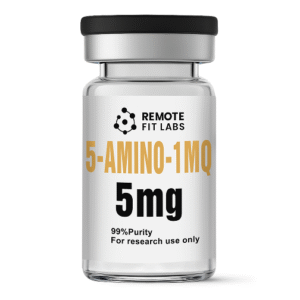
Remote Fit Labs follow industry-leading protocols for synthesis and purification, ensuring their products consistently exceed 99% purity. By implementing rigorous standards and best practices throughout the production lifecycle, they provide researchers with high-quality peptides suitable for a wide range of laboratory applications.